 Next Batch Labs
Venture lab
We build with the people who do the work.
A business owner shows us where their team gets stuck. We build software they can try on the next job. Our first venture, Layer, helps trade contractors see where a job is going over budget while the crew is still on site.
Our first venture
Layer
Construction software in a limited production pilot with a contractor group.
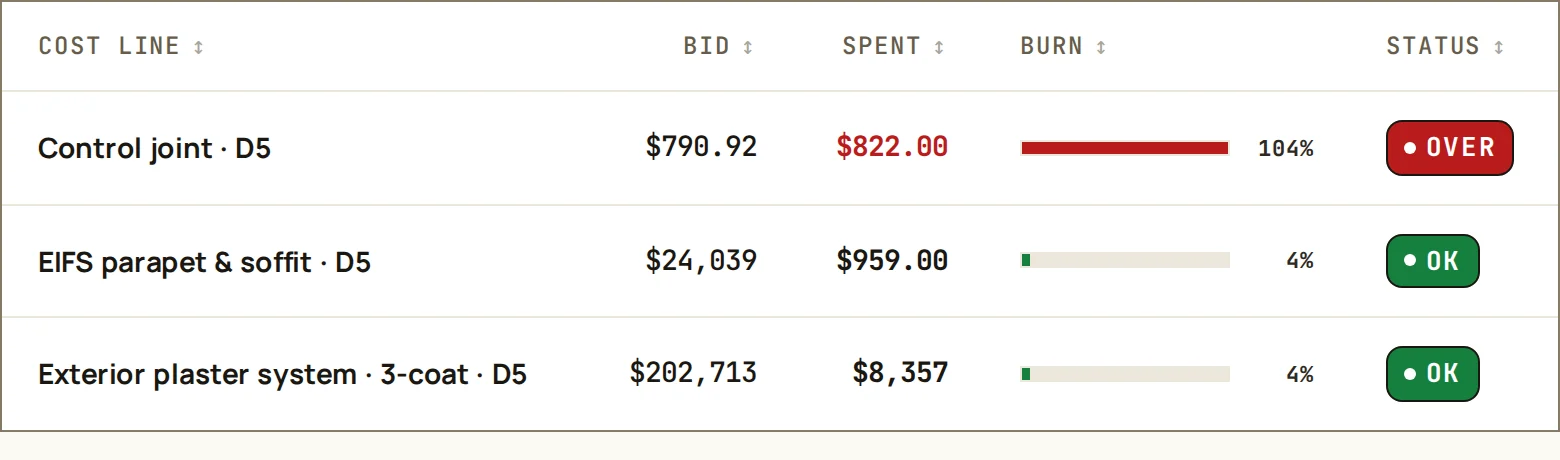
Explore LayerWhich part of this job is costing more than we bid?
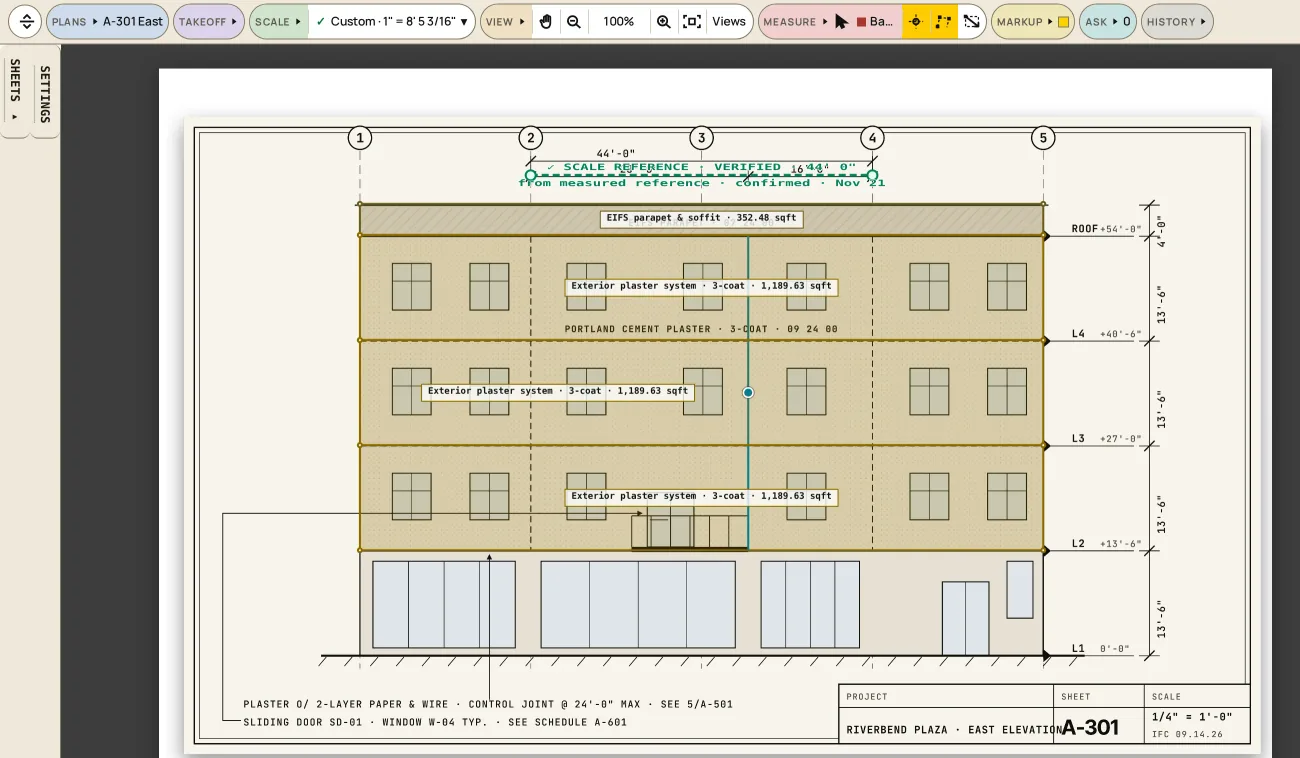
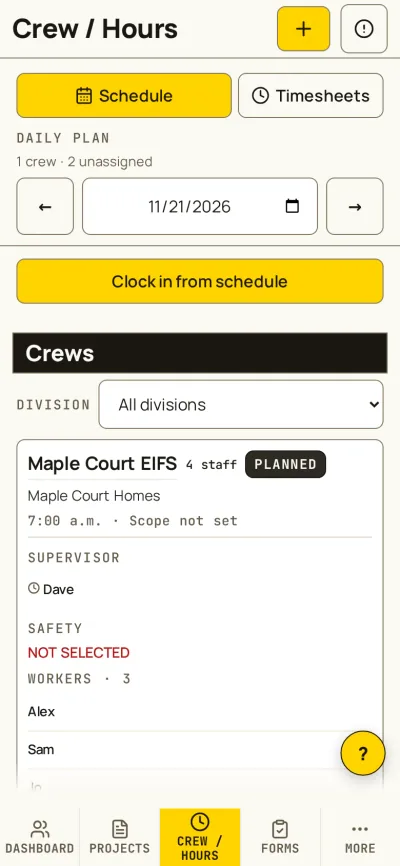
In Layer, an estimator measures the drawing and prices each part of the job. A foreman assigns crew hours to the work they went into. The owner can compare spending with the bid for each line while there’s still time to ask the crew what happened.
Our thesis
What should survive a handoff?
A foreman needs to know where the crew worked. Payroll needs the hours. An owner needs to know what the plaster work cost. Each person can look at the same shift and need a different answer.
Our starting point is the decision someone has to make. We work backwards from it. For the owner to see a plaster overrun, the link between a shift and the plaster work has to survive the trip from the foreman’s phone to the office.
- A job total
- 8 hours on site
- A breakdown by task
- 6 hours on plaster
2 hours on prep
What can the owner tell?
Both entries give payroll eight hours for the same person. Only the breakdown lets the owner put six hours against the plaster bid. Once the detail is lost, adding up the hours again can’t recover it.
Where category theory and homotopy type theory fit
Category theory studies how steps compose. It prompts us to ask what has to line up when one step feeds another. A measurement can feed a price if both refer to the same work and agree on the unit. A length in feet needs a rate per foot. Seven Sketches in Compositionality
Homotopy type theory interprets an identification between two things as a path. The design question it inspires for us is “the same for what purpose?” The two time entries agree for totaling the shift. They tell different stories about its cost. The HoTT Book
How we build with a partner
Layer grew out of one contractor group’s work. The way we build it is meant to travel. An estimator has to know how to price a wall. Finding where a handoff breaks, trying a small fix and checking it with the people affected are habits we can bring to the next business.
Walk through one real job
We ask the people doing the work to show us the last time it went wrong. A drawing, a spreadsheet and the phone call needed to reconcile them can tell us more than a feature list.
Try the smallest useful change
Taylor Sando built the lab’s agent fleet to turn a request into a working change. A person sets the priority. Agents build the change, a separate check tests it, and the fleet opens the live app to check what shipped.
Test the whole route
Take a crew-hours change. Start a shift from the schedule, then try entering an equivalent shift by hand. Would the office see the same hours on the same job? That’s a check the foreman and the developer can both judge.
What the partner owns
The partner knows the trade, chooses which problems matter and puts each change in front of the people doing the job. In Layer, a crew member can send a photo and a sentence from the app and get a reply on that report. Our longer-term aim is for the partner to run the business while the lab keeps developing the software and shares in the outcome.